Free Auto Insurance Quote in 2 Minutes!


    Prefer to speak with an agent?


    Call Now

    A suspended Illinois vehicle registration usually traces back to an insurance verification issue, but the fix depends on the notice in your ILIVS record. In many cases, you need valid insurance, an SR-22 filing when required, proof of coverage, and a reinstatement fee. We’ll show you how to check the cause, correct it, submit the right information, and confirm your registration before driving.

    Step 1: Check the Suspension Notice and ILIVS Record

    The first step in learning how to fix suspended vehicle registration ILIVS is finding the exact reason for the suspension. Don’t buy a policy or pay a fee until you know which vehicle and violation the state record lists.

    Read the notice from the Illinois Secretary of State. Look for the vehicle identification number, plate number, suspension date, stated cause, and instructions for reinstatement. Compare the VIN on the notice with your vehicle title, registration card, and insurance documents.

    You can also review the insurance-verification details connected to your vehicle. If the notice is missing, the VIN may help you locate the record. Our ILIVS Illinois Insurance Verification System information explains how the VIN can support verification and how an electronic affidavit may apply to a stored or sold vehicle.

    Separate the problem into one of these groups:

    • The vehicle had no insurance during the state’s verification period.
    • The insurer reported a cancellation, lapse, or policy mismatch.
    • The state record has an incorrect VIN, plate number, or vehicle status.
    • The notice asks for proof of insurance or an SR-22 filing.
    • The registration was suspended for another reason listed by the Secretary of State.
    What the notice says First action What to gather
    Insurance lapse or no coverage Ask an insurer or agency about an eligible policy VIN, plate number, address, vehicle details
    SR-22 required Ask for an SR-22 filing tied to the correct policy Driver details and the state requirement
    Incorrect vehicle information Compare the notice with your title and registration VIN and registration records
    Stored or sold vehicle Check whether an affidavit is available Sale or storage details

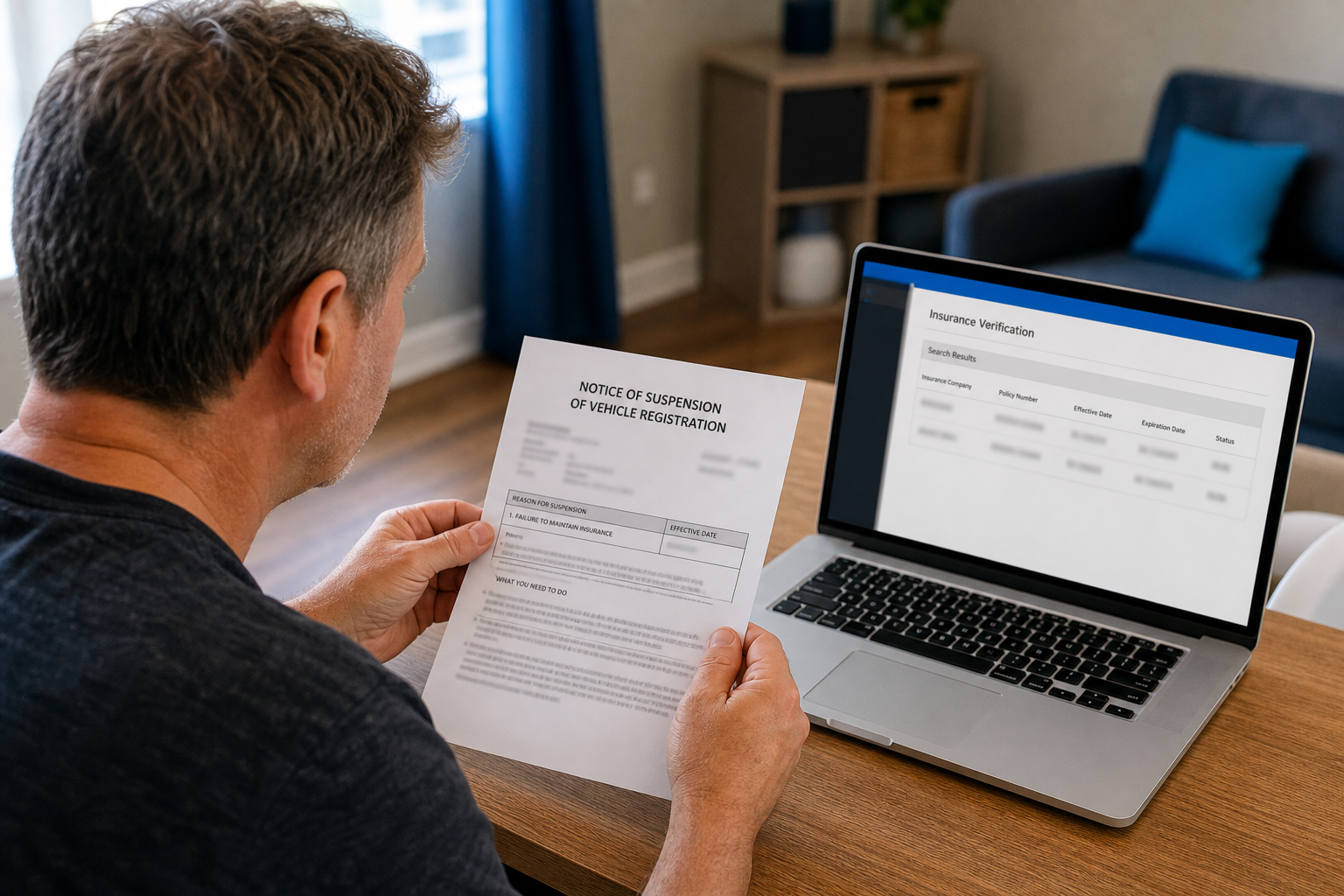
    Illinois driver checking a suspended vehicle registration and ILIVS record

    The notice controls. A general online checklist cannot replace the specific instruction attached to your record. If the plate number or VIN does not match, pause before paying anything and ask the Secretary of State how to correct the record.

    Step 2: Resolve the Specific Cause of the Registration Suspension

    Fixing a suspended vehicle registration in ILIVS means correcting the event that caused the state to flag the vehicle. A new policy alone may not clear an old lapse, and paying a fee alone may not satisfy an insurance requirement.

    Start with the simplest question: was the vehicle insured on the date shown in the notice? If the answer is yes, contact the insurer that held the policy and ask for written proof covering that date. The document should identify the insured vehicle and match the VIN on the state record.

    If the vehicle was not insured, obtain coverage before you drive it. Give accurate information about the vehicle’s ownership, garaging address, household drivers, and use. The insurer may ask about prior coverage and the event that led to the suspension. Accurate details help the agency and carrier determine what policy can be issued.

    Some drivers see a suspension tied to a vehicle they sold, gave away, or placed in storage. That case may need a state record update or an electronic affidavit instead of a new policy. Do not insure a vehicle you no longer own just to make the notice disappear. Match the fix to the facts.

    Another common issue is a policy mismatch. The state may have received a different VIN, an old plate number, or a policy record that did not connect to the registration. Ask the insurer to review the transmission and confirm which vehicle the policy covers. Keep the confirmation for your records.

    The Illinois Secretary of State is the final authority for the registration record. Insurance agencies can help arrange eligible coverage and submit an insurance filing when available, but they cannot remove a state suspension on their own.

    Key Takeaway: Identify the cause first. Then correct the policy, record, vehicle status, or filing that matches the notice.

    If your notice names a license suspension as well as a registration suspension, treat those as separate issues. The steps can overlap, but clearing one record does not always clear the other.

    Step 3: Obtain Valid Illinois Insurance or an SR-22 Filing When Required

    Insurance is often the gateway step in this process. An SR-22 is a certificate filed by an insurer to show financial responsibility under a state requirement. It is not a separate insurance policy. The policy still needs coverage that the insurer will issue for your situation.

    Ask whether the notice requires ordinary proof of insurance, an SR-22 filing, or both. A standard insurance card may show that a policy exists, while an SR-22 is a specific filing connected to a driver’s state requirement. The exact filing and policy terms depend on the insurer and the state record.

    Illinois Drivers Insurance helps Illinois drivers compare available coverage options, including SR-22 coverage. We can review the details needed for a quote and explain whether non-owner coverage may fit a driver who does not own a vehicle. Non-owner insurance generally covers the named driver rather than a vehicle they own, and exclusions vary by policy.

    Our SR-22 information for suspended drivers explains why the filing may be part of a reinstatement request. We can also help you ask the right questions before buying:

    • Will the policy cover the vehicle listed on the suspension notice?
    • Will the insurer file the SR-22 with Illinois when required?
    • Is the filing for an owner policy or a non-owner policy?
    • What proof will you receive after the policy is issued?
    • What happens if the policy is canceled or lapses later?

    Provide the full facts. Include the correct address, vehicle use, ownership status, household drivers, tickets, accidents, and prior insurance history. Rates and eligibility vary by driver, vehicle, location, history, coverage, and insurance company. A quote is based on the information submitted, so a false or incomplete answer can cause problems later.

    If you do not own a car, ask about non-owner SR-22 coverage instead of placing a vehicle on a policy that does not match your situation. Non-owner coverage does not replace the owner’s policy on a borrowed vehicle, and it may not cover every use or vehicle.

    Illinois driver obtaining SR-22 insurance filing after vehicle registration suspension

    Illinois Drivers Insurance states that online quotes and policy issuance may be available after the required information is received. Same-day availability is not the same as state approval, so wait for confirmation that the filing and policy are active before driving.

    For a plain explanation of the filing itself, our page on how SR-22 filing works can help you separate the certificate from the insurance policy.

    Step 4: Submit Proof, Documents, and Fees Through the Correct Channel

    Once the cause is fixed, submit the proof and fee through the channel named in your notice. The correct route may be an online Secretary of State payment page, an insurance filing from your carrier, or a document process through Vehicle Services.

    Have these details ready:

    • Suspension notice or reference number.
    • Vehicle identification number and plate number.
    • Current insurance card or proof of coverage.
    • SR-22 confirmation, if the notice requires it.
    • Payment method for the stated reinstatement or non-compliance fee.

    The research reviewed for this topic found a repeated trade-off between speed and cost. The Secretary of State route commonly lists a $100 non-compliance or reinstatement fee with an online payment option. A lower $14 fee through the Vehicles Department may involve paperwork and a stated processing period of one to two weeks.

    Route shown in the notice or record Reported fee Processing detail Best fit
    Secretary of State online payment $100 Online processing may resolve the fee issue sooner Drivers who need the faster available route
    Vehicles Department process $14 Paperwork and one to two weeks may apply Drivers who can wait and whose notice permits it

    Use only the option your notice permits. A cheaper fee is not useful if it does not match your suspension type or if the delay leaves the registration inactive. Save the receipt, confirmation number, uploaded documents, and policy filing notice in one folder.

    Pro Tip: Take a screenshot after an online payment or upload. Keep the confirmation with your insurance documents until the registration record shows active status.

    Step 5: Confirm the Registration Is Active Before Driving

    The final step in fixing suspended vehicle registration through ILIVS is checking the state record again. A payment receipt or insurance card does not prove that the registration has already been restored.

    Wait for the filing or document confirmation from the insurer. Then use the official state record or the instructions on your notice to check the vehicle status. Confirm the VIN and plate number, not just your name.

    Look for an active registration or a message showing that the suspension has cleared. If the record still shows suspended, compare the status with your payment receipt and insurance filing confirmation. Contact the agency named on the notice and ask which item remains open.

    Do not drive the vehicle while the record still shows a suspension. Driving with suspended registration can lead to more penalties, and a later stop may happen before a delayed update reaches the state system.

    Check again after a policy change, cancellation, or lapse. An SR-22 filing may need to remain in force for the period set by the state or court. If the policy ends and the filing is not replaced, the insurer may report the lapse.

    Illinois Drivers Insurance can help you review available insurance and SR-22 options, but only the state can confirm that its registration record is active. That confirmation is the finish line for this task.

    FAQ: Suspended Vehicle Registration ILIVS

    How do I fix suspended vehicle registration ILIVS?

    Start by reading the suspension notice and checking the ILIVS record for the cause. Then correct the insurance or vehicle-record issue, obtain an SR-22 if required, submit proof, pay the listed fee, and confirm that the registration is active. Do not drive until the state record shows the suspension has cleared.

    How much does it cost to reinstate a suspended registration in Illinois?

    The fee depends on the route and suspension type listed in your record. The research reviewed for this topic found a commonly listed $100 online non-compliance fee and a $14 Vehicles Department option that may take one to two weeks. Follow your notice because the lower fee may not apply to every case.

    Do I need an SR-22 to restore suspended vehicle registration?

    You need an SR-22 only if the Illinois requirement attached to your record calls for one. An SR-22 is a financial-responsibility filing made by an insurer, not a stand-alone policy. Ask the insurer to connect the filing to the correct policy and vehicle or to discuss non-owner coverage if you do not own a car.

    Can I pay the Illinois registration reinstatement fee online?

    Many suspension notices provide an online payment option, but the available route depends on the record. The research reviewed here found online payment listed with the $100 Secretary of State process. Check the official instructions on your notice before paying, then save the receipt and confirm the status afterward.

    Can I drive while my Illinois registration is suspended?

    You should not drive the vehicle while its registration remains suspended. Buying insurance or submitting a payment does not prove that the state has cleared the record. Verify the VIN and plate status through the instructed state channel before operating the vehicle on public roads.

    What if my ILIVS notice has the wrong VIN or plate number?

    Contact the agency named on the notice before paying or buying coverage for the wrong vehicle. Compare the notice with your title, registration card, and insurance documents. An incorrect VIN or plate connection may require a record correction or affidavit rather than a new policy.

    Conclusion

    Start with the notice, then fix the exact issue it names. For many insurance-related suspensions, the next useful move is to obtain valid coverage or an SR-22 filing and use the payment route that matches your record. Illinois Drivers Insurance can help you review available options. After submission, verify the registration status before you drive.

    Leave a comment

    Your email address will not be published. Required fields are marked *

    Translate »
    🚗💨 Fetching your rates

    This can take up to a minute. Please don’t close this page.

    • Buy Online: If an online purchase option is shown, you can complete it without speaking to an agent.
    • Buy by Phone: If online purchase isn’t available, you can finalize coverage by calling our agency.
    You’ll see your options as soon as the quotes finish loading.