
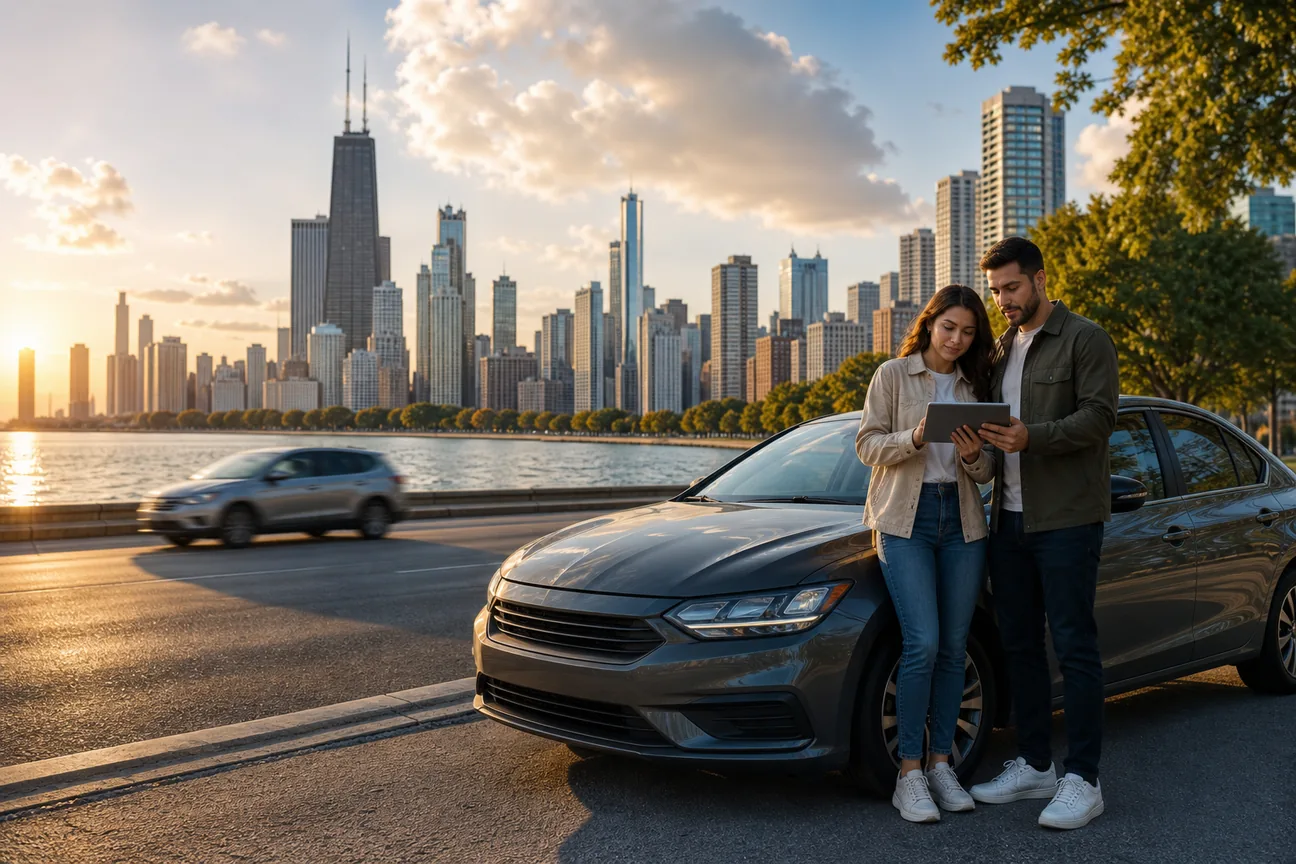

Chicago insurance prices can change sharply by driver, vehicle, ZIP code, and coverage level. The seven providers reviewed in our research did not publish starting annual premiums, so a useful shortlist must focus on quote access, discounts, coverage choices, and service fit. Here are 10 options to consider, with Illinois Drivers Insurance in the first spot.
1. Illinois Drivers Insurance (Our Top Pick)
Illinois Drivers Insurance’s Chicago car insurance service is our top pick for drivers who want help comparing available coverage in Illinois. We help with car insurance quotes, SR-22 coverage, non-owner insurance, and other common driver situations.
We can review factors that affect your quote, such as your address, vehicle, driving history, household drivers, and chosen limits. That matters in Chicago because a quote for one ZIP code may differ from a quote for another. The same driver may also see a different price after changing their coverage options.
We also work with drivers who have tickets, accidents, a lapse in coverage, a suspended license, or no vehicle. Eligibility depends on the insurance company and its underwriting rules. Rates vary, and we won’t promise approval or the best available rate before reviewing your details.
Start with accurate information. Your address, parking location, vehicle use, and driving record should match the facts on your application.
2. Multi-Carrier Quote Comparison Agencies
Multi-carrier agencies are useful for Chicago shoppers who want to compare more than one insurance company through one request. Instead of judging a single advertised rate, you can compare quotes that use the same driver and vehicle details.
Ask whether the quotes use matching liability limits, deductibles, and optional coverage. A cheaper result may simply have less protection. You should also confirm which company would issue the policy and whether it can handle an SR-22 or non-owner request.
The catch is that no comparison tool represents all insurers. Quote results also change when you correct an address, add a household driver, or change vehicle use.
3. Digital-First Insurance Providers
Digital-first providers suit drivers who want to enter their details online and review quote choices without starting with an office visit. Online forms often ask for your ZIP code, vehicle, use of the car, current insurance, driving record, and birth date.
Speed is useful, but the result still needs a close review. Check the declarations page for limits, deductibles, excluded drivers, and policy dates before you buy. A quote tool may also show different results after a soft credit-based insurance review or driving-record check, depending on the provider.
Online service may be less useful if your case involves an SR-22, a suspended license, several household drivers, or a non-owner policy. In those cases, ask a licensed agent to explain what the quote includes.
4. Local-Agent Insurance Providers
Local-agent providers are a good fit for Chicago drivers who want a person to explain coverage choices. An agent can walk through liability limits, uninsured motorist coverage, deductibles, and the difference between a quote and an active policy.
This route may help if you recently bought a vehicle, added a teen driver, or need to list business use correctly. An agent can also explain what information the insurance company needs before it makes a final decision.
The limitation is that one local office may represent a limited group of insurance companies. Ask which companies are available and request the same coverage limits for each comparison.
5. Regional Insurance Providers
Regional insurance providers may suit drivers who want coverage choices built around Illinois underwriting rules. Research reviewed for this article found that coverage details were available for only two of the seven providers examined, and both highlighted Illinois-related options.
Chicago rates also vary by location. A public rate analysis cited an average full-coverage cost for Chicago, but that figure was based on a sample driver and should not be treated as your quote. The Chicago rate analysis explains why ZIP code, age, driving history, and coverage level can change the result.
Regional providers may have fewer online tools than larger brands. Ask about claims contact, available deductibles, rental coverage, and whether the company supports SR-22 filings before you choose.
6. National Insurance Providers
National insurance providers can suit drivers who value online account tools, mobile access, and broad discount programs. Research in our sample mentioned multi-policy discounts for some national providers, but it did not show starting premiums for any of the seven providers reviewed.
Ask about multi-policy discounts if you also have renters or homeowners insurance. Ask whether accident forgiveness has eligibility rules. These features may sound useful, but the price and terms depend on the company, driver, vehicle, and policy.
National scale does not mean the quote will be lowest in your Chicago ZIP code. Compare the full policy, not the brand name or an advertised discount alone.
7. Military-Eligibility Insurance Providers
Military-eligibility providers are worth checking if you serve or have a qualifying family connection. Eligibility rules differ, so you may need to verify military status before receiving a quote or discount.
Some military programs include support for active-duty members, veterans, National Guard members, reserve members, or eligible relatives. Deployment, storage, and household changes may also affect how you describe vehicle use and garaging.
This category won’t fit every Chicago driver. If you don’t qualify, compare other provider types instead of assuming a military program applies to you.
8. SR-22 Insurance Options
SR-22 insurance usually means an insurance company files a required state form connected to your policy. The filing shows that you carry the required financial responsibility coverage. It is not a separate insurance policy.
You may need an SR-22 after a suspension or serious violation, but the Illinois Secretary of State controls the filing requirement and its duration. Read your notice carefully. An SR-22 does not itself reinstate your license, erase a violation, or guarantee approval.
Illinois Drivers Insurance helps drivers compare available SR-22 coverage and can discuss owner and non-owner situations. If your policy cancels or lapses during the required period, the insurance company may report that change and your driving status may be affected.
Ask these questions before buying:
- Will the policy include the required liability limits?
- Can the insurance company file the SR-22 for Illinois?
- What happens if the policy is canceled or not renewed?
- Do you need owner or non-owner coverage?
9. Non-Owner Insurance Options
Non-owner insurance is for a driver who needs liability coverage but doesn’t own a vehicle. It may help with an SR-22 requirement, yet it generally does not cover a vehicle you own or replace the owner’s policy on a borrowed car.
Coverage depends on the policy and insurance company. Permitted use, limits, exclusions, and the way borrowed vehicles are handled can vary. Review those details before you drive someone else’s car.
Our non-owner car insurance information can help you frame the request. Tell us if you regularly use one vehicle, live with the owner, or need a non-owner SR-22. Those facts can affect eligibility and the quote.
10. Coverage-Tailored Insurance Providers
Coverage-tailored providers focus on matching the policy to the vehicle and the way you use it. Basic coverage may meet the state requirement, while collision and broader coverage may be considered for a newer, financed, or leased vehicle.
Full coverage is an informal term. It commonly means liability plus collision and broader coverage, but it is not one standard policy. Collision generally addresses damage from a crash, while broader coverage generally addresses covered non-collision losses. Policy terms and exclusions control.
Deductibles matter too. A higher deductible may reduce a premium, but you would pay more out of pocket after a covered loss. Compare limits and deductibles side by side instead of choosing only by the first price shown.
Market Analysis and Pricing Data
Chicago’s auto‑insurance market is one of the most competitive in the Midwest, driven by a dense urban environment, high traffic volume, and a mix of personal and commercial vehicles. According to the Illinois Department of Insurance’s 2024 market report, the average annual premium for a 30‑year‑old driver with a clean record in the 60614 ZIP code was $2,145 for full‑coverage policies, while the same driver in the 60655 area faced an average of $2,320.
Key pricing drivers:
- ZIP code density: Neighborhoods with higher accident and theft rates (e.g., Near North Side) command up to 12% higher premiums.
- Vehicle type: Compact cars average $1,780, midsize SUVs $2,310, and high‑performance models $3,650.
- Credit‑based insurance score: Drivers with scores above 750 typically see a 7‑10% discount.
- Driving history: A single moving violation can increase a quote by 15%‑20%.
These figures are averages; individual quotes can vary widely based on discounts, coverage limits, and underwriting criteria.
Claims Satisfaction Scores
Consumer satisfaction with claims handling is a critical differentiator. Below is the latest J.D. Power 2024 Auto Insurance Study score for our partner network provider:
Higher scores typically correlate with faster claim payouts, clearer communication, and more transparent deductible handling. When evaluating a provider, consider both price and claims satisfaction.
Additional Provider Comparisons
Beyond the original ten categories, several nationally recognized carriers have a strong presence in Chicago and offer unique programs worth reviewing.
Compare the 10 Chicago Car Insurance Options at a Glance
Use this table to narrow the type of provider for your needs. It is a decision aid, not a rate chart. The research sample did not provide starting annual premiums.
What to Look for Before Selecting Affordable Car Insurance in Chicago
Start with the same facts for every quote. Use your real Chicago address and overnight parking location. List each household driver who may use the vehicle. State whether the car is used for commuting, pleasure, business, delivery, or another purpose.
Your age, driving record, credit-based insurance score where permitted, ZIP code, vehicle, and coverage level can all affect pricing. A ticket or accident may change the result, while a clean record may qualify for different underwriting treatment. Discounts can include multi-policy or multi-vehicle savings, but each insurance company sets its own rules.
Illinois law requires liability coverage and uninsured motorist bodily injury coverage at specified limits. Then compare quotes using identical limits and deductibles.
Actionable Tips for Chicago Drivers
- Leverage ZIP‑code clustering: If you have a flexible parking location (e.g., a garage that serves multiple ZIP codes), obtain quotes for each neighboring ZIP code to identify the lowest‑cost area.
- Bundle wisely: Combine auto with renters, homeowners, or umbrella policies only when the bundled discount exceeds the sum of individual discounts.
- Utilize telematics wisely: Enroll in usage‑based programs only if you consistently drive below 10,000 mi/yr and have a clean record.
- Review deductible impact: Raising your deductible from $500 to $1,000 can shave 5%‑12% off the premium. Ensure you have emergency funds to cover the higher out‑of‑pocket cost.
- Ask for “no‑claim‑bonus” restoration: If you’ve completed a defensive‑driving course, request the insurer to retroactively apply the discount to the current policy year.
- Check for local discounts: Chicago public‑employee unions, university staff, and certain Chicago‑area employers negotiate group rates. Inquire about affiliation discounts.
- Maintain a clean credit profile: In Illinois, insurers may use a credit‑based insurance score. Paying off credit cards and avoiding collections can lower your premium by 5%‑10%.
- Annual policy review: Re‑evaluate your coverage each December. Life changes (new driver, vehicle sale, move) often unlock new discounts.
Frequently Asked Questions
What is the cheapest car insurance in Chicago?
The cheapest policy depends on your driver profile, ZIP code, vehicle, record, and selected limits. No provider in the reviewed sample published a starting annual premium. Compare quotes using the same coverage so you can tell a genuine price difference from a lower level of protection.
How can I lower my Chicago car insurance quote?
You can lower the quote by comparing multiple companies and checking available discounts. Ask about multi-policy, multi-vehicle, and violation-free programs when they apply. Review deductibles and limits carefully, because reducing protection may lower the premium while leaving you with more out-of-pocket risk.
Does my Chicago ZIP code affect car insurance?
Yes, your Chicago ZIP code can affect car insurance pricing. Insurance companies may rate areas differently based on claims data, traffic patterns, theft, and other underwriting factors. You must use the address where you live and keep the vehicle, even if another ZIP code appears cheaper.
What coverage does Illinois require?
Illinois requires liability insurance plus uninsured motorist bodily injury coverage at state-set limits. Liability pays for covered injury or property damage you cause, up to the policy limits. Collision, rental reimbursement, and other optional coverages may be available but are not the same as the required liability coverage.
Can I get an SR-22 without owning a car?
Yes, a non-owner policy may support an SR-22 filing for an eligible driver without a vehicle. Non-owner coverage does not insure a vehicle you own and may not cover every borrowed car. Confirm the filing requirement, permitted use, limits, and exclusions before selecting the policy.
How do telematics programs affect my premium?
Telematics (usage‑based) programs track driving behavior and can reward safe habits with discounts ranging from 5% to 20%. However, high‑risk behaviors (hard braking, excessive speed) can increase your premium. Review the program’s privacy policy and understand that discounts are usually contingent on maintaining safe driving for the policy term.
Are there special discounts for Chicago public‑service employees?
Many insurers offer affiliation discounts for city employees, teachers, police officers, and union members. These discounts may be a flat‑rate reduction or an additional percentage off the standard rate. Ask your agent or use the quote tool’s “Affiliation” field to capture these savings.
What should I do after a claim is filed?
Document the incident with photos, police reports, and witness statements. Notify your insurer within 24 hours and keep receipts for any out‑of‑pocket expenses (rental car, towing). Follow up on claim status weekly and request a written estimate of any deductible or payout.
Conclusion
For most Chicago shoppers, the sound first move is to compare accurate quotes through Illinois Drivers Insurance, then check limits, deductibles, filing needs, and discounts before selecting a policy. Request a quote with your actual driver and vehicle details so the available options reflect your situation.
