

Drivers with tickets, accidents, a coverage lapse, or an SR-22 need more than a low number on a quote screen. They need a policy that matches their filing status, vehicle use, and coverage needs. We’ve grouped the main options Illinois drivers can review, starting with Illinois Drivers Insurance and then moving through SR-22, non-owner, post-violation, and discount-focused choices.
1. Illinois Drivers Insurance
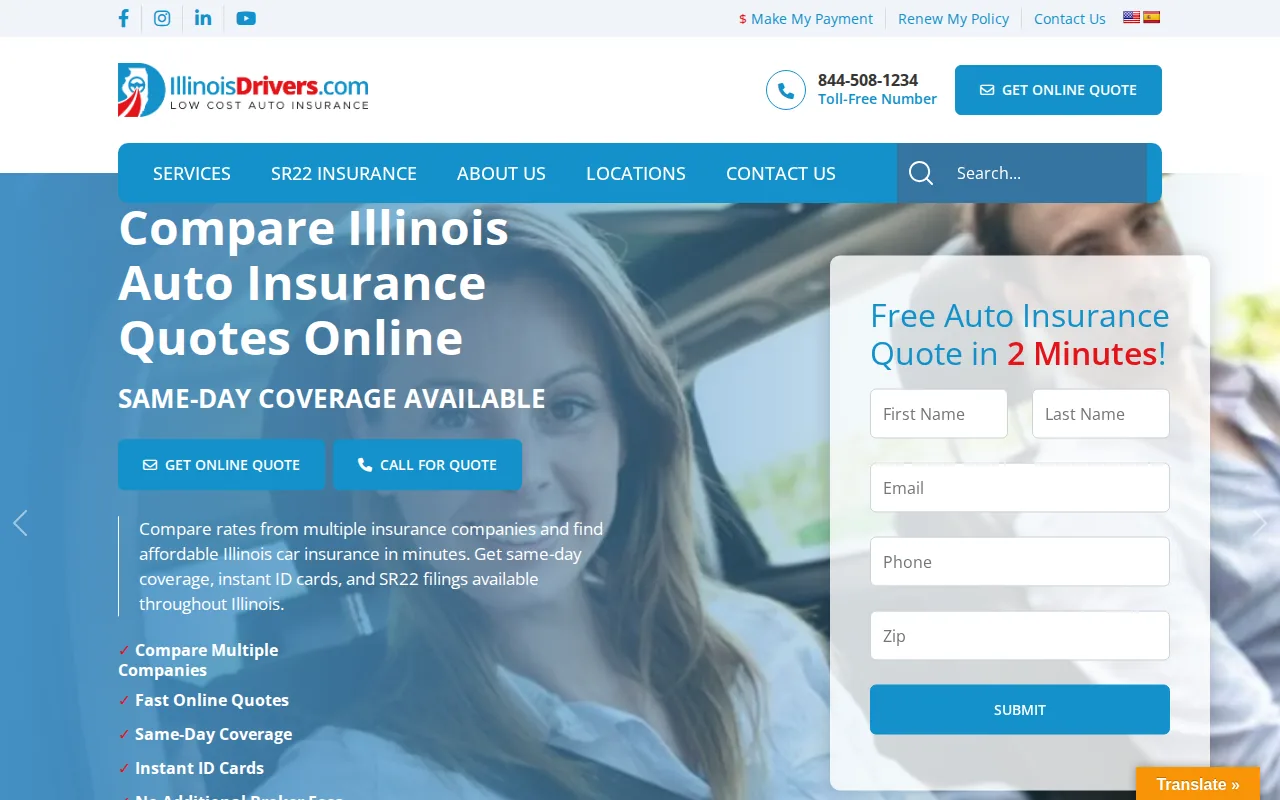
Illinois Drivers Insurance is an Illinois agency that helps drivers compare car insurance options, including SR-22 filings and non-owner coverage. It fits drivers who want local agency help while reviewing choices from available insurance companies.
We work with several common situations. You may need an SR-22 after a serious violation or a license suspension. You may need non-owner coverage because you drive borrowed cars but don’t own one. You may also be replacing a policy after a lapse, ticket, accident, or cancellation.
Our stated discount categories include good-student, multi-vehicle, violation-free, safety-device, and safe-driving program discounts. Eligibility depends on the insurance company and your details. A discount label alone doesn’t tell you what your final premium will be.
We also help you compare liability limits and optional protection. “Full coverage” is informal language. It often refers to liability plus complete and collision coverage, but the policy terms still control what is covered.
For drivers with a prior violation, the application must be accurate. Your address, vehicle use, household drivers, ownership, and driving history can affect underwriting. Our car insurance options for drivers with a prior record explain the details we may need before a quote can be reviewed.
The main limit is that we can’t promise approval, a certain rate, a filing time, or license reinstatement. The insurance company’s underwriting rules and the state’s requirements still apply.
2. SR-22-Focused Insurance Agencies for License Reinstatement
SR-22-focused agencies help drivers look for a policy that can support a required financial-responsibility filing. This category fits someone whose license instructions call for an SR-22 but who may not know whether owner or non-owner coverage is needed.
An SR-22 is generally a certificate filed by an insurance company in connection with an insurance policy. It isn’t a separate policy. The filing shows that the required financial responsibility has been arranged through the policy.
Ask the agency to confirm four details before you buy:
- Whether the policy supports an Illinois SR-22 filing.
- An owner or non-owner policy.
- What liability limits apply to your situation.
- What happens if the policy cancels or lapses.
A lapse can create a serious problem if an active filing depends on continuous insurance. Don’t assume that buying a new policy fixes the state record by itself. The filing, policy status, and reinstatement process each involve different parties.
Illinois Drivers Insurance can review SR-22-related quote needs and explain what information is required. Our SR-22 insurance explanation is useful if you’re still sorting out the difference between the filing and the policy.
Agency support can reduce confusion, but it can’t replace instructions from a court or the Illinois Secretary of State. Check the exact notice you received before choosing coverage.
3. Non-Owner Insurance Providers for Drivers Without a Vehicle
Non-owner insurance is designed for a person who drives at times but doesn’t own a car. It may also be considered by someone who needs an SR-22 without owning a vehicle.
This option usually focuses on liability coverage for the named driver. It doesn’t insure a vehicle you own, and it doesn’t replace the owner’s policy on a borrowed car. Coverage for borrowed vehicles depends on the policy terms and the insurance company.
Non-owner coverage may fit a driver who:
- Uses rental cars on occasion.
- borrows a household member’s car under permitted use.
- Needs proof of insurance while between vehicles.
- Needs to review an SR-22 filing without vehicle ownership.
Read the permitted-use rules closely. Regular access to a household vehicle can change the underwriting question. So can ownership, garaging, business use, or delivery work.
Before you request a quote, gather your driver’s license details, current address, driving history, and any state filing instructions. Giving incomplete information can produce a quote that changes during review.
Illinois Drivers Insurance can discuss non-owner car insurance and who may need it. The key decision comes down to this: do you need coverage for yourself as a driver, or coverage tied to a specific vehicle?
Non-owner insurance can be useful, but it isn’t a substitute for a vehicle owner’s required policy. Confirm both policies before driving someone else’s car.
4. Coverage Options After Tickets, Accidents, or a Lapse
Car insurance after a ticket, accident, or lapse depends on the event, your driving history, your vehicle, and the coverage you request. A quote from one company can differ sharply from another because insurers use different underwriting rules.
Published Illinois rate analyses show why a single sample price is a poor promise. Research on full-coverage rates stresses that actual rates vary by age, location, vehicle, and driving history. Use such research as a comparison reference, not as a personal quote.
Drivers with a ticket should ask how the violation affects eligibility and whether any safe-driving or violation-free discount may apply later. Drivers with an accident should ask about deductibles, liability limits, collision coverage, and claim-related underwriting.
A lapse raises a different question. The company may ask when the prior policy ended, why it ended, and whether the vehicle was driven during the gap. Be exact. A policy application should match your actual history.
Illinois requires liability insurance, including uninsured and underinsured motorist bodily injury coverage, at state-set limits. The Illinois Department of Insurance provides state insurance information through its official site, including consumer resources and regulatory guidance: Illinois Department of Insurance consumer information.
Ask for quotes using the same limits and deductibles. Otherwise, a lower premium may simply reflect less protection. We also suggest asking how complete and collision coverage apply to your own vehicle, since liability coverage generally addresses damage or injury you cause to others.
Rates may stay improved for a period after a violation, but the timing depends on the company and the record. Review the quote again when your driving history changes.
5. Discount and Telematics-Based Providers for Eligible Drivers
Discount and telematics-based providers may suit drivers who can qualify through safe driving, vehicle features, household policies, student status, or a driving-monitoring program. Telematics uses driving data under the program’s terms, so ask what is measured and how it affects the policy.
Common discount categories include:
Telematics isn’t a fit for all drivers. Some people prefer not to share driving data. Others may have work patterns that make the program’s rules less useful. Ask for the policy terms before choosing a monitored program.
A discount also doesn’t solve an SR-22 issue by itself. First confirm that the insurer can support the filing. Then compare the coverage limits, deductibles, exclusions, and total premium with another eligible option.
Reported sample premiums in high-risk insurance research varied widely, with figures such as $66 per month. These figures aren’t comparable without matching the driver profile, limits, vehicle, and time period. Use them only as a reminder to request personal quotes.
Our agency can help you ask about available discount categories while keeping the focus on coverage first. A discount that removes needed protection isn’t a good trade.
FAQ: Car Insurance for Illinois Drivers With Tickets or SR-22 Needs
Can I get car insurance after a ticket in Illinois?
Yes, you may still be able to get car insurance after a ticket in Illinois, but eligibility and pricing depend on the violation, your record, vehicle, location, and coverage. Request quotes with the ticket reported accurately. Ask whether the company has a safe-driving or violation-free discount and when its rules may change.
Do I need an SR-22 after every ticket?
No, an SR-22 isn’t required after every ticket. A court or the Illinois Secretary of State may require the filing in certain situations. Read your official notice before buying coverage. An insurance agency can review the filing request, but it can’t decide whether the state requires one.
Can I get an SR-22 without owning a car?
Yes, some drivers may review non-owner insurance for an SR-22 when they don’t own a vehicle. The policy generally focuses on the named driver and doesn’t cover a car the driver owns. Eligibility, permitted use, limits, and exclusions vary by insurance company.
Does a lapse make Illinois car insurance more expensive?
A lapse may affect eligibility or pricing because insurers ask about prior coverage. The effect depends on how long the gap lasted, whether you drove during it, and the company’s underwriting rules. Give the insurer complete information and compare quotes using the same coverage limits.
What coverage should I compare after an accident?
After an accident, compare liability limits first, then review complete and collision coverage if you own a vehicle. Check deductibles and exclusions as well. A lower premium may reflect lower limits or less protection. Your vehicle’s value, loan or lease terms, and driving history may affect the available choices.
Conclusion
For Illinois drivers dealing with an SR-22, lapse, ticket, accident, or non-owner need, start with a quote review that checks filing status and coverage limits together. Illinois Drivers Insurance can help you compare available options. Gather your driving history and state notice, then request a quote based on accurate details.
